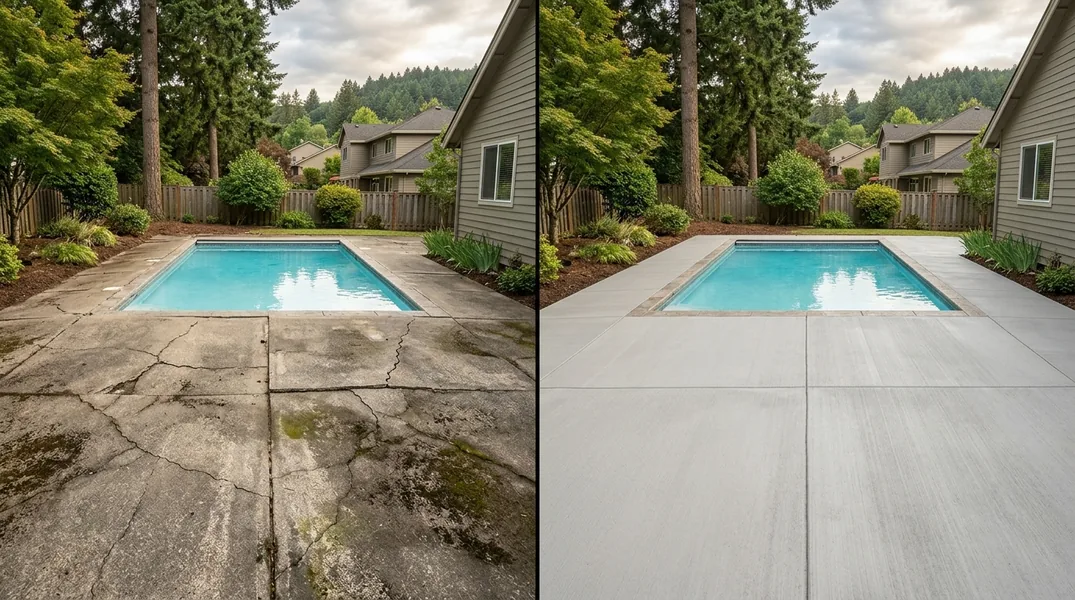
Concrete vs. Pavers: The Key Differences
When it comes to upgrading your outdoor spaces in Eugene, choosing between concrete and pavers is one of the most important decisions you'll make. Both materials offer distinct advantages and trade-offs that can significantly impact your home's curb appeal, functionality, and long-term maintenance requirements. Understanding these differences upfront will help you make an informed decision that aligns with your budget, lifestyle, and aesthetic preferences.
Concrete Driveways are a monolithic surface poured as a single, continuous slab. This creates a smooth, uniform appearance that many homeowners appreciate for its clean, modern look. Pavers, on the other hand, are individual units (typically made of stone, brick, or permeable materials) that are laid side by side to create a pattern. Each approach has fundamentally different installation processes, durability profiles, and maintenance needs that we'll explore throughout this guide.
Durability and Longevity: Which Lasts Longer?
Both concrete and pavers can last for decades when properly installed and maintained, but they age differently. Quality concrete typically lasts 25 to 30 years, though with proper care and occasional Concrete Repair & Resurfacing, it can last even longer. Concrete's longevity depends heavily on climate conditions, freeze-thaw cycles, and how well it was initially sealed. In Eugene's wet climate, proper drainage and sealing are essential to prevent cracking and water damage.
Pavers generally offer comparable or slightly superior longevity, often lasting 25 to 50 years depending on the material and installation quality. The advantage pavers have is that individual units can be replaced if they crack or shift, whereas concrete repairs are often more extensive and visible. However, pavers require more ongoing maintenance to keep them level and prevent weeds from growing between the joints. The permeable paver options popular in Oregon also offer environmental benefits by allowing water to drain naturally, reducing runoff and supporting local ecosystems.
Maintenance Requirements and Long-Term Care
Concrete surfaces demand regular sealing every 2 to 3 years to protect against moisture penetration, UV damage, and staining. In the Pacific Northwest, where rainfall is abundant, this maintenance is particularly important. You'll need to clean your concrete regularly to prevent algae and moss growth, which thrive in wet conditions. Cracks may develop over time, especially in areas prone to freeze-thaw cycles, and addressing these early prevents water from seeping underneath and causing further damage.
Paver maintenance is more labor-intensive but offers different advantages. You'll need to regularly sweep and wash the surface, and occasionally re-sand the joints where weeds can take root. Pavers may shift slightly over time, requiring periodic releveling. However, the modular nature of pavers means you can replace a single damaged unit without affecting the rest of the surface. Many homeowners appreciate this flexibility, as it can reduce repair costs over the lifespan of the installation. If you're considering pavers for a Concrete Patios or driveway project, factor in the additional labor for maintenance when budgeting.
Aesthetic Appeal and Design Flexibility
Concrete offers a sleek, contemporary aesthetic that appeals to many modern homeowners. A freshly poured concrete surface provides a clean canvas that can complement various architectural styles. For those seeking more visual interest, Stamped & Decorative Concrete options allow you to create patterns that mimic stone, brick, or wood while maintaining concrete's durability and ease of maintenance. Color options and finishes have expanded significantly, giving homeowners more creative freedom than in past decades.
Pavers excel in design versatility. They come in numerous colors, textures, and patterns, allowing you to create intricate designs that reflect your personal style. Whether you prefer a traditional herringbone pattern, a modern geometric layout, or something entirely custom, pavers can accommodate it. This flexibility makes pavers particularly popular for homeowners who view their outdoor spaces as an extension of their home's design statement. The downside is that this customization often comes with higher initial costs and more complex installation requirements.
Cost Comparison: Concrete vs. Paver Installation Pricing
When evaluating pricing for your driveway or patio project, concrete typically offers the most budget-friendly option. Standard concrete costs between $4 to $8 per square foot for basic installation, making it an economical choice for larger areas. Decorative concrete finishes will increase costs, but even stamped or colored options usually remain less expensive than quality paver installations. For a typical 500-square-foot driveway, you're looking at $2,000 to $4,000 for standard concrete, though this varies based on site conditions and local labor rates.
Paver installation generally costs more upfront, typically ranging from $8 to $25 per square foot depending on the material quality and design complexity. Premium pavers or intricate patterns can push costs even higher. However, some homeowners view this as an investment in long-term value, since individual pavers can be replaced without replacing the entire surface. When considering the total cost of ownership over 20 to 30 years, including maintenance and potential repairs, the gap between concrete and pavers narrows considerably. We recommend getting a free estimate from Eugene Concrete Pros to understand the specific costs for your project, as factors like soil conditions, drainage requirements, and local labor rates significantly impact final pricing.
Environmental Considerations and Drainage
Environmental impact is increasingly important to homeowners in Oregon. Traditional concrete is a porous surface that can contribute to stormwater runoff, potentially carrying pollutants into local waterways. However, permeable concrete options are becoming more available and can help mitigate this issue. Pavers, particularly permeable paving systems, allow water to drain through the surface and into the ground below, reducing runoff and supporting groundwater recharge. This is especially beneficial in areas with heavy rainfall like Eugene.
If environmental sustainability is a priority, permeable pavers or permeable concrete might be worth the additional investment. These options comply with many local stormwater regulations and can even qualify for tax incentives in some jurisdictions. When you call Eugene Concrete Pros at (541) 632-8507 for your consultation, ask about permeable options that align with your values while meeting your practical needs. Whether you choose concrete or pavers, selecting a responsible contractor who understands local environmental guidelines ensures your investment benefits both your property and your community.
Looking for a professional concrete contractor in Eugene? Eugene Concrete Pros responds fast for all your concrete needs.
Get a Free QuoteOur services: Concrete Driveways · Concrete Patios · Stamped & Decorative Concrete